
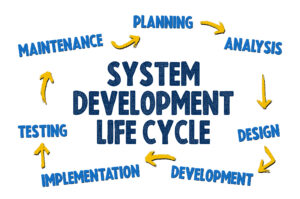
When organizations think about compliance, they tend to focus on controls, policies, and audit evidence. Software development rarely gets the same attention — at least not until something goes wrong. The assumption is that security and compliance are things you bolt onto a finished product, not something that needs to be woven into how the product is built in the first place.
That assumption is expensive. Skipping a secure software development lifecycle program does not just create technical vulnerabilities. It creates compliance gaps that compound over time, slow down certification efforts, and ultimately cost far more to address than they would have if they had been built in from the start.
What a Secure SDLC Actually Covers
A secure software development lifecycle, or SDLC, is a framework for integrating security practices into every stage of how software is designed, built, tested, and deployed. This includes threat modeling during the design phase, secure coding standards during development, vulnerability testing before release, and ongoing monitoring after deployment.
The goal is not to slow down development — it is to catch and address security issues at the stage where they are cheapest and easiest to fix, rather than discovering them during an audit or after a breach.
How Skipping It Creates Compliance Problems
Most major compliance frameworks now include explicit requirements around secure development practices. SOC 2’s availability and confidentiality criteria address how software is built and tested. CMMC 2.0 includes controls around configuration management and system development. HIPAA’s technical safeguards extend to the applications that handle protected health information. ISO 27001 and ISO 27002 both include controls related to secure development environments and change management.
When an organization has not implemented a formal secure SDLC program, these requirements become difficult to satisfy. Auditors will look for documented policies, evidence of code reviews, records of vulnerability scanning, and documentation of how security requirements are defined and tested. If those practices do not exist — or exist informally without documentation — the compliance gaps become visible quickly.
Remediating those gaps after the fact is far more disruptive than building them in from the start. Retrofitting security controls into existing development processes requires retraining teams, updating tooling, creating documentation where none existed, and often going back through previous releases to assess what may have been missed.
The Velocity Problem
There is also a speed issue that organizations frequently underestimate. Development teams that have not built security into their workflow tend to treat security reviews as a separate gate — something that happens at the end of the process before a release goes out. This creates bottlenecks, last-minute delays, and a culture where security is seen as an obstacle rather than a built-in expectation.
By contrast, teams with a mature secure SDLC program move faster over time because security decisions are made early, issues are caught before they require major rework, and compliance evidence is generated automatically as part of normal development activities.
Leadership Owns This Problem
Secure SDLC failures are rarely the result of developers not caring about security. They are almost always the result of leadership not prioritizing it, not providing the right resources, and not establishing the governance structures that make secure development sustainable. This is a strategy and oversight issue — not just a technical one.
That is precisely why fractional technology leadership can be so valuable in this context. Having an experienced vCTO or vCIO who understands both the technical and compliance dimensions of software development can bridge the gap between what your team is building and what your compliance program requires.
At Steadfast Partners, our Steadfast Align service provides the SDLC advisory and technology leadership support your organization needs to close that gap. Contact Steadfast Partners at 737-210-5503 today to learn more.